
Thermal Barriers That Stop Conditioned Air Loss
Spray Foam Insulation in Brownsville for buildings experiencing high energy costs, inconsistent temperatures, or air leakage through structural gaps
Air leaks through attic penetrations, gaps around rim joists, and cracks in wall cavities allow conditioned air to escape while pulling in hot, humid outdoor air that forces cooling equipment to run longer cycles. Open-cell and closed-cell spray foam insulation installed by Toro Builders seals these leaks throughout residential and commercial properties in Los Fresnos, improving energy efficiency by creating continuous thermal barriers that traditional batt insulation cannot match. Recessed lighting fixtures, plumbing penetrations, and electrical boxes create pathways where air moves freely between conditioned spaces and unconditioned attics, which accounts for more heat gain and loss than inadequate insulation R-value alone.
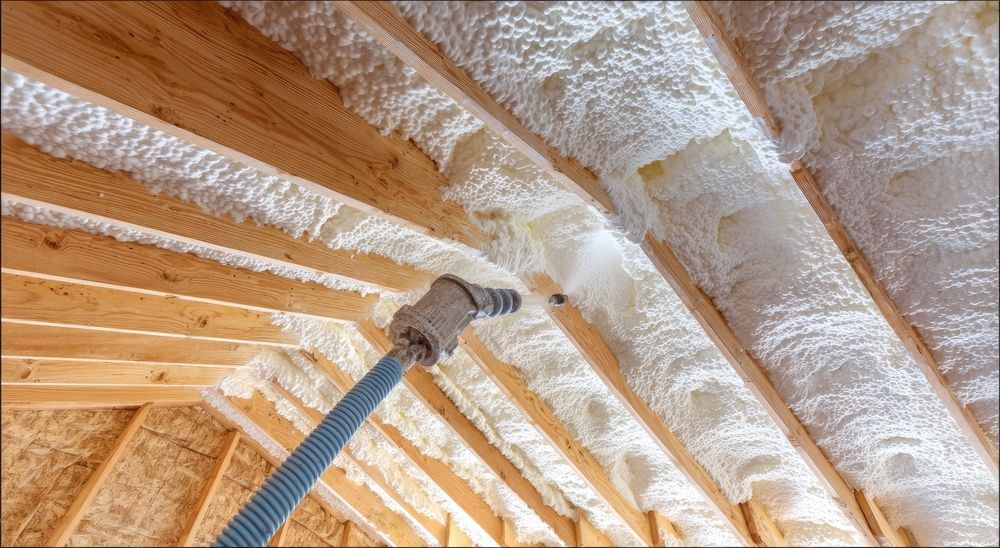
The expanding foam fills irregular cavities completely and adheres to framing, sheathing, and substrates to form an airtight seal that blocks infiltration and exfiltration. Open-cell foam works well in interior walls for sound dampening and in conditioned attics where roof assemblies become part of the thermal envelope, while closed-cell foam provides higher R-value per inch and moisture resistance suited to rim joists, crawl spaces, and exterior wall applications. Installation begins with surface preparation to remove dust and moisture, continues with controlled spray application in multiple passes to build thickness without overheating the substrate, and concludes with trimming excess foam flush with framing for drywall or finish work.
Schedule a
spray foam insulation assessment to identify where air sealing will deliver the greatest efficiency improvements.
What Sealing Air Leaks Accomplishes
Homes and commercial buildings lose conditioned air primarily through unintentional gaps rather than through insulation with inadequate R-value, which means sealing leaks often produces larger energy savings than simply adding more traditional insulation over existing coverage. Spray foam creates a monolithic barrier that eliminates the gaps between batts, the compression around obstacles, and the settling that occurs with blown insulation over time.
After Toro Builders completes spray foam installation, indoor temperatures stay more consistent between rooms since conditioned air no longer escapes through hidden pathways, humidity levels stabilize because outdoor moisture infiltration decreases significantly, and monthly energy bills drop as heating and cooling equipment runtime declines. You notice fewer dust particles settling on surfaces since the negative pressure that pulled unconditioned attic air through ceiling cracks has been eliminated, and HVAC systems reach thermostat settings faster without fighting constant air exchange with unconditioned spaces. In Brownsville's humid climate, reducing infiltration also lowers the moisture load that air conditioning systems must remove, which improves comfort and prevents the mold growth that develops when humid outdoor air contacts cool interior surfaces.
Insulation solutions suit new construction where open framing allows complete coverage, remodeling projects where walls are already opened for other work, and existing buildings where attic access permits sealing the ceiling plane. Recommendations consider each property's design, whether conditioned space includes the attic or stops at the ceiling, and whether moisture control requires vapor-permeable open-cell foam or vapor-resistant closed-cell applications. Quality materials and experienced workmanship ensure proper adhesion, correct thickness, and uniform coverage without voids or gaps.

Common Questions About This Service
Insulation decisions often involve understanding differences between foam types and how air sealing compares to adding traditional insulation products.
What differentiates open-cell from closed-cell spray foam?
Open-cell foam expands to roughly three inches per pass with an R-value around 3.5 per inch and remains vapor-permeable, while closed-cell foam expands to about one inch per pass with R-value near 6.5 per inch and acts as a vapor barrier, making each type suited to different applications based on space constraints and moisture management needs.
How does spray foam reduce energy costs compared to batt insulation?
The air sealing properties eliminate infiltration and exfiltration that account for twenty-five to forty percent of heating and cooling loads, which batt insulation does nothing to address since it only slows conductive heat transfer without blocking air movement through gaps.
When should attics receive spray foam instead of blown insulation?
Conditioned attic designs where HVAC equipment and ductwork sit within the attic space benefit from spray foam applied to the roof deck, which brings the entire attic into the thermal envelope and eliminates the duct leakage and heat gain problems that occur when equipment operates in unconditioned spaces exceeding one hundred thirty degrees during Brownsville summers.
What preparation does spray foam installation require?
Surfaces must be clean, dry, and free of loose debris for proper adhesion, electrical and plumbing work should be completed before foam application, and areas not receiving foam require masking since overspray creates difficult cleanup challenges on finished surfaces.
How long before insulated spaces can be occupied?
Open-cell foam typically requires a few hours for off-gassing before reoccupation, while closed-cell foam may need longer cure times depending on thickness and ventilation, with specific timing based on manufacturer specifications and application conditions.
Toro Builders provides insulation solutions for new construction, remodeling projects, and existing buildings using quality materials and experienced installation crews. Contact us to discuss insulation systems based on your property's performance needs and thermal envelope design.